
0 Product Products
No products
 Safety Products
 Ink Coating & Handling
 Maintenance & Shop
 Curing Controls
 Curing Equipment
 Printing Supplies
UV Dose Measurement Guide
Consistent UV dose is what separates a fully cured coating from one that flakes, blocks, or fails adhesion tests. This guide explains what dose means on a production line, which tools UV Process Supply recommends, and how to record a baseline you can repeat every shift.
What UV Dose Means on Your Production Line
UV dose combines lamp intensity and exposure time. A web moving faster under the same lamp receives less total energy than a slower pass. Belt speed changes, lamp aging, reflector contamination, and batch thickness all affect the energy that actually reaches the ink or coating surface.
Most UV inks and coatings specify a minimum dose in mJ/cm² for full cure. Recording your actual line readings lets you compare against supplier data and catch problems before finished product leaves the press room.
Tools for Measuring UV Dose
Three measurement approaches cover most UV curing environments:
- Radiometers give numeric intensity and dose readings at a set wavelength. Browse our UV Measurement category for belt-style, probe, and profiling models suited to conveyor and chamber systems.
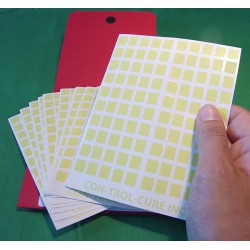
- UV intensity labels and FastCheck strips provide a low-cost pass/fail check that operators can run between full radiometer profiles. See UV Intensity Labels and UV FastCheck Strips for options that change color when minimum dose is reached.
- Cure test instruments confirm that the coating itself is cross-linked, not just that the lamp output looks normal. Pair radiometer checks with solvent rub or adhesion testing from our Cure Testing Instruments selection.
Step-by-Step: Setting a Baseline Reading
- Run your conveyor at normal production speed with lamps warmed up to operating temperature.
- Place a radiometer puck or dose label at the same height and position as your substrate surface.
- Record intensity, dose, belt speed, lamp hours, and substrate type in a shift log.
- Repeat at the start of each shift and after any lamp replacement or major speed change.
- Flag readings that drop more than 15 percent below your established baseline and inspect reflectors, bulbs, and exhaust airflow before increasing lamp power.
When to Re-Check Lamp Output
Schedule extra measurements after bulb changes, quartz sleeve cleaning, reflector adjustments, or when switching to a new ink batch. Seasonal humidity shifts can also change how coatings absorb energy on porous substrates.
Operators working near active lamps should follow the PPE guidance in our Safety Products section. For downloadable reference materials, see the Technical How-To Manuals page, including the radiometer selection guide.
Return to the UV Process Supply homepage to request quotes or browse the full Curing Controls catalog.